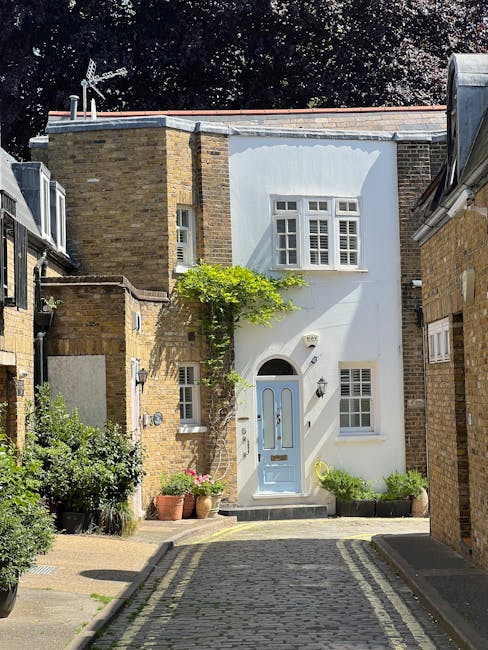
SW3 postcode removals guide for Chelsea mews and terraces

Moving in SW3 is not quite the same as moving anywhere else in London. Chelsea mews, stucco terraces, narrow one-way streets, residents' parking, delicate finishes, and awkward staircases all change the feel of a move. If you are planning a home move in this part of Chelsea, this SW3 postcode removals guide for Chelsea mews and terraces will help you understand what matters before moving day, how to plan around the quirks of the area, and how to avoid the small problems that become big ones when the van is already outside.
Truth be told, the difference between a smooth Chelsea move and a stressful one is often preparation rather than muscle. With the right packing plan, the right vehicle, and a removals team that understands mews access and terrace layouts, you can save time, reduce damage risk, and keep the day calmer than you might expect. Let's get into the practical side of it.
Why SW3 postcode removals guide for Chelsea mews and terraces Matters
SW3 covers some of London's most recognisable residential streets, and that matters because the physical layout of the area directly affects removals. A terrace house with a narrow hallway, a mews property with tight turning space, or a flat accessed through a shared entrance can all create different moving challenges. If you treat them all the same, you tend to pay for it in delays, stress, or minor damage that could have been avoided.
In Chelsea, many properties were not designed with modern moving-day logistics in mind. Furniture may need to be turned, angled, or carried by hand rather than rolled. Parking can be a puzzle. Lift access may be shared. Staircases can be steep, curved, or just annoyingly narrow. That is why local knowledge is not a luxury here; it is part of the job.
It also matters commercially. If you are comparing removal companies, you are not simply choosing someone with a van. You are choosing whether the team can read the site conditions properly, plan the load correctly, and arrive ready for the realities of SW3 rather than the idea of SW3. That sounds obvious, but people still get caught out.
There is another reason this guide matters: protection of the property itself. Chelsea mews and terraces often feature painted bannisters, polished floors, period doors, ornate cornicing, and tight internal corners. Those details look lovely. They also leave very little room for error. A mattress dragged at the wrong angle or a table carried without the right protection can turn into a repair bill before you have even unpacked the kettle.
Expert summary: In SW3, the best removals plan is usually the one that respects access first, volume second, and speed third. That order saves more headaches than people expect.
How SW3 postcode removals guide for Chelsea mews and terraces Works
A good move in SW3 starts before moving day. First comes the property assessment: what type of house or flat is it, how easy is the access, where can the vehicle stop, and what furniture needs special handling? Then comes the packing plan, the route planning, and the time-slot coordination. Only after that does the lifting begin. Simple, but not simple at all.
For mews homes, the main issue is usually access. Mews lanes can be tight, with limited room for a larger vehicle to park or turn. That often changes the choice of vehicle and the sequence of loading. In terraces, the challenge is more often internal: front steps, long passageways, upstairs bedrooms, boxed-in landings, and neighbours close enough to hear every thump if the move is handled badly. No one wants that at eight in the morning.
If you are moving from or into a flat above a terrace, then flat removals experience becomes especially useful. Shared stairwells, entry codes, concierge rules, and lift bookings all affect the timeline. That is the sort of detail that sounds small until it eats half your morning.
Many moves in SW3 also benefit from a smaller vehicle or a more flexible crew. In some cases a man and van setup is enough for a one-bedroom property or a partial move. For larger homes, a full team and a bigger load space make more sense. There is no prize for hiring more truck than you need, but there is definitely a cost if you hire too little.
And then there is timing. Early starts can help you work around traffic and make the best use of loading space, but they also require everyone else in the chain to be ready. If one box is still open and the wardrobes are half emptied, the schedule starts to wobble. You feel it straight away.
Key Benefits and Practical Advantages
When a removals plan is adapted to Chelsea mews and terraces, the benefits are practical rather than glamorous. The move tends to run more smoothly, furniture is less likely to be damaged, and the team wastes less time figuring out how to get items out of the property. That means a calmer day, and often a more efficient one too.
- Less handling damage: tight corners and period features are respected from the start.
- Better time control: realistic access planning reduces delays.
- Cleaner loading: organised packing makes it easier to stack and protect goods properly.
- Smarter vehicle choice: the right van or truck avoids repeat trips.
- Less neighbour disruption: quieter, quicker movements matter in close streets.
There is also a psychological benefit. A move can feel chaotic even when nothing has gone wrong. When the team has already accounted for the awkward stairs, the loading zone, and the item list, the whole day feels more manageable. People often say they "just wanted it all to be straightforward." Fair enough. That is exactly what a decent removals plan should deliver.
If you are still at the comparison stage, a sensible place to begin is the provider's pricing and quotes information, so you know how the job is likely to be assessed. Transparent quoting is especially helpful in SW3 because access differences can affect effort and vehicle time. Hidden surprises are nobody's friend.
Who This Is For and When It Makes Sense
This guide is for anyone moving in or out of SW3, but it is especially useful if your property has one or more of the following features: mews access, a terraced layout, narrow stairs, limited roadside parking, shared entrances, or valuable furniture that needs careful handling. In other words, if your move is likely to be slightly fiddly. And many Chelsea moves are, let's face it.
It makes sense for:
- families moving between Chelsea terraces
- couples downsizing from a larger mews house
- flat-sharers leaving upper-floor properties
- buyers moving into a period home with delicate finishes
- landlords and letting agents arranging end-of-tenancy removals
- small businesses relocating nearby and needing secure transport
The guide is also relevant if you are not moving everything at once. A partial move, a staged move, or a temporary move into storage can be a smart choice when completion dates, refurbishments, or building works do not line up neatly. That happens more often than people admit.
For larger family homes, or where there are heavy items, it may be more suitable to work with house removals support rather than a minimal van-only setup. If you are moving somewhere with a lot of stairs, antiques, or awkward access, that extra planning is worth it.
Step-by-Step Guidance
1. Walk the property before you pack
Start with a realistic look at the space. Measure doorways, check stair width, note low ceilings, and think about where large items will actually turn. It is remarkable how often people pack everything neatly and only then realise the sofa will not make the corner. Not ideal. A quick walkthrough avoids that drama.
2. Separate large items from standard boxes
Large items deserve their own plan. Beds, wardrobes, mirrors, artwork, dining tables, and pianos are not just "more things." They need correct wrapping, lifting, and sequencing. If you have a piano, for instance, it is wise to explore dedicated piano removals rather than assuming standard handling will do the trick.
3. Pack room by room and label clearly
Room-by-room packing helps on both ends of the move. Label boxes with the room and a short contents note, such as "kitchen - fragile" or "main bedroom - books." A vague label like "misc" is how moving day gets messy. People laugh about that afterwards, usually.
If you want help with the physical packing itself, the packing and boxes service route can save time and reduce the risk of underpacked or overfilled cartons. Good packing is not about making boxes look pretty. It is about keeping everything intact.
4. Confirm parking and access in advance
In SW3, parking is not something you leave to luck. Confirm where the vehicle can stop, whether a permit or loading bay is needed, and how far the carrying distance will be from the van to the front door. A short carry can become a long one if the road is busy or the nearest safe spot is not as near as you hoped.
5. Choose the right moving method
Some moves are best handled with a smaller flexible team, while others need a bigger crew and vehicle capacity. If you are moving a single flat or only a few rooms, man with a van may be enough. For a full family property, a dedicated moving truck setup is often more efficient.
6. Protect the property on both sides
Use floor covers, door protection, furniture blankets, and corner padding where needed. In old Chelsea houses, little scuffs stand out immediately. The hallway may look robust, but a single nick in a painted skirting board can be all you remember about the day. A bit dramatic, maybe, but very real.
7. Keep essentials separate
Pack one box or bag with documents, chargers, toiletries, tea, medication, keys, and a change of clothes. Keep it with you if possible. You do not want to be opening forty boxes just to find the kettle cable. You really don't.
Expert Tips for Better Results
Small adjustments make a surprisingly large difference in SW3. In our experience, the smoothest moves are not always the biggest or the most expensive. They are the ones where the details were handled early and clearly.
- Use softer packing for fragile items. A glass lamp does not like loose newspaper and a heavy box of plates. Give breakables room to breathe.
- Photograph cable setups before unplugging. It sounds tiny, but it saves time later.
- Keep an "open first" box for each key room. One for the kitchen, one for the bedroom, one for the bathroom. That makes the first evening much less chaotic.
- Book service windows with a buffer. Chelsea streets can be unpredictable. A ten-minute delay sometimes becomes thirty.
- Be realistic about what can be dismantled. A wardrobe that looks simple can be awkward once it is halfway apart.
If you are dealing with high-value pieces or tricky furniture, it can also be wise to ask about furniture removals support rather than assuming standard loading is enough. Period furniture and awkward shapes are where experienced handling really earns its keep.
One slightly old-school tip: keep a notebook or phone note with the names of rooms and priority items. It feels almost quaint now, but in the middle of a move it stops that familiar "where did we put the kettle?" moment. Which, honestly, is the emotional low point of most moving days.
Common Mistakes to Avoid
There are a few mistakes that show up again and again in Chelsea removals. Most are avoidable, which is the frustrating part.
- Underestimating access. A mews lane or terraced staircase may look manageable on paper and still be awkward in real life.
- Packing too late. Last-minute packing tends to produce weak boxes and missing essentials.
- Ignoring the route from room to van. The inside of the property matters just as much as the road outside.
- Forgetting building rules. If there is a porter, lift booking, or time restriction, sort it early.
- Choosing a vehicle only by price. Cheapest is not always best if it means repeat journeys or rushed handling.
- Leaving fragile items unmarked. A box of crockery should not look like office paper.
Another common issue is assuming every removals company will automatically know how to handle SW3. Some will. Some will not. The difference becomes obvious pretty quickly when the van arrives. A good operator asks specific questions before moving day, and that is usually a reassuring sign rather than a nuisance.
Tools, Resources and Recommendations
You do not need fancy equipment to move well, but you do need the right basics. Here is a practical list that makes a difference in Chelsea mews and terrace moves:
- strong cardboard boxes in mixed sizes
- tape, labels, and a marker pen
- bubble wrap or paper wrap for fragile pieces
- furniture blankets and stretch wrap
- door and floor protection
- basic tools for dismantling beds and tables
- bags for screws, bolts, and fittings
- drinks, snacks, and a phone charger
On the service side, it helps to match the job to the right support. A straightforward local move may suit a removals service or smaller vehicle hire. A bigger family move may need a more complete package, while business relocations are better handled through commercial moves expertise. That is not overcomplicating things; it is just being honest about the scale of the job.
If you are comparing providers, also pay attention to practical trust factors: insurance, complaint handling, payment security, and sustainability practices. Those details say a lot about how a company works day to day. For a closer look at standards and safeguards, the pages on insurance and safety, payment and security, and recycling and sustainability are all useful starting points.
Law, Compliance, Standards, or Best Practice
For most home moves in SW3, the main compliance concerns are practical rather than highly technical. You still need to think carefully about parking restrictions, access permissions, neighbour consideration, safe lifting, and the handling of items that may require special care. If a building has its own move-in rules, those should be followed closely. Same with any local parking or loading arrangements.
From a best-practice point of view, a removals team should use safe handling methods, protect the premises, and communicate clearly about limitations before the job starts. That includes being upfront if a vehicle cannot park right outside, if extra carrying time is needed, or if a large item may require dismantling. Clear expectations are part of good service.
For customers, the sensible checks are straightforward:
- confirm the quote scope in writing
- ask what happens if access is harder than expected
- understand the insurance position before moving day
- read the terms and conditions carefully
- know how complaints are handled if something goes wrong
If you prefer to understand a provider's background before booking, the about us page is often a useful read, and so is the company's health and safety policy. Neither replaces common sense, but both help you see whether the operation is run thoughtfully.
Options, Methods, or Comparison Table
Different SW3 moves suit different approaches. Here is a simple comparison to help you decide what feels realistic.
| Move type | Best for | Strengths | Watch-outs |
|---|---|---|---|
| Man and van | Small flats, partial moves, light loads | Flexible, usually quicker to arrange, good for tight access | May not suit large households or heavy volumes |
| Full removals crew | Whole-house moves, family homes, delicate furniture | More hands, better for protection and speed | Needs clearer planning and a more detailed booking |
| Storage-led move | Staged moves, renovation gaps, uncertain dates | Reduces pressure when timings are messy | Requires extra coordination and longer planning |
| Same-day removals | Urgent changes, short-notice situations | Fast response and practical flexibility | Less room for error; not ideal for highly complex moves |
If your move is urgent, a same-day removals option can be worth exploring, but only if the access and packing are already under control. Speed is helpful; speed without preparation is just noise.
For students moving into smaller Chelsea lets or leaving shared accommodation, student removals can be a more practical fit. And if your move is mostly furniture rather than the whole household, a focused furniture pick up can sometimes be the smartest route.
Case Study or Real-World Example
Here is a realistic example, based on the sort of move that comes up often in SW3. A couple in a Chelsea terrace were moving from a first-floor maisonette into a nearby mews property. On paper, the distance was tiny. In practice, the move was all about stairs, parking, and one very awkward sofa.
The team first checked the staircase dimensions and the turning points in the hallway. They also confirmed where the vehicle could stop without blocking access for neighbours. That mattered because the mews road had limited passing space and the terrace had a narrow front approach. The sofa, which looked perfectly ordinary in the living room, would not have made the corner in one piece.
The solution was simple enough: the sofa was wrapped, partly dismantled, and carried in a controlled sequence with extra padding on the corners. Boxes were labelled by room, mirrors were loaded last, and the essentials bag was kept separate. There was no drama, no rushing, and no last-minute surprise about parking. The day still felt like a move, obviously, but not a battle.
The real takeaway? The job was not "easy" because it was small. It was easy because the access details were handled properly before the lorry arrived. That is the bit people often miss.
Practical Checklist
Use this checklist in the final days before your move. It keeps the obvious things visible when your head is full of the less obvious ones.
- Confirm moving date and arrival window
- Check parking, loading access, and any building rules
- Measure doors, stairs, and large furniture
- Label boxes by room and priority
- Pack an essentials bag for the first 24 hours
- Protect fragile items and corner pieces
- Dismantle furniture only where needed
- Set aside keys, documents, and chargers
- Tell neighbours if the move may affect access
- Review quote details and included services
- Keep contact details for your removals team handy
Quick reminder: if you are unsure whether you need packing support, heavier vehicle capacity, or extra storage, ask before the moving day rather than guessing. A short conversation now beats a long problem later.
Get a free quote today and see how much you can save.
Conclusion
SW3 moves are often less about distance and more about detail. Chelsea mews and terraces can be beautiful places to live, but they ask for care, planning, and a removals approach that respects the layout of the property as much as the belongings inside it. If you prepare well, choose the right moving method, and stay realistic about access, the day becomes far more manageable.
That is the honest version. Not effortless, maybe, but absolutely manageable. And when the last box is in, the kettle is found, and the place starts to feel like home again, the hard bit fades quickly. That's the nice part.
If you are planning a move in SW3, take your time with the prep, ask sensible questions, and work with a team that understands the street as well as the job. The difference is usually felt in the first ten minutes. Then the rest tends to follow.
Frequently Asked Questions
What makes SW3 removals different from other London moves?
SW3 often involves mews lanes, terraces, shared entrances, and period properties with awkward stairs or narrow halls. That means access planning matters more than it might elsewhere.
Do I need a larger removals vehicle for a Chelsea terrace?
Not always. It depends on volume, access, and how far the vehicle can park from the property. In some cases, a smaller and more flexible setup is actually better.
Is a man and van service enough for a mews property?
It can be, especially for smaller moves or part-load jobs. But if you have lots of furniture, fragile pieces, or a long carry distance, a fuller removals service may be better.
How far in advance should I book a move in SW3?
As early as you can, especially if the date is tied to completion, tenancy changeover, or building access rules. The more complicated the property, the more useful early planning becomes.
Can removals teams handle stairs and awkward corners?
Yes, but only if they know about them in advance. Good teams plan the route, measure bulky items, and use protective materials to reduce the risk of damage.
What should I do if parking is tight outside my property?
Confirm loading options early and share the details with your removals provider. In SW3, parking and stopping space can affect timing more than the distance itself.
Are packing services worth it for Chelsea mews and terraces?
Often, yes. Packing services can save time and improve protection, especially when you are moving fragile, valuable, or oddly shaped items. They also reduce the number of loose end-of-day surprises.
What happens if my furniture will not fit through the door?
The best answer is to find out before moving day. Dismantling, alternative routes, or specialist handling may be needed. That is why a pre-move assessment is so useful.
Should I put some belongings into storage during an SW3 move?
If your dates do not line up neatly, or if you are renovating or downsizing, storage can make the whole process much less stressful. It is a practical option, not a backup plan to be embarrassed about.
How do I know if a removals company is trustworthy?
Look for clear pricing, sensible questions about access, insurance information, straightforward terms, and a professional approach to safety. A company that explains the process clearly usually understands the job properly.
Can I book urgent or same-day removals in SW3?
Yes, sometimes. It depends on availability, access, and how ready everything is to move. Same-day help is most effective when the packing is already under control.
What should I keep with me on moving day?
Keep documents, keys, phone chargers, medication, a change of clothes, and a small essentials kit close at hand. It makes the first few hours in the new place much easier.
Are period properties more likely to need specialist handling?
Often they are, especially if there are narrow staircases, original features, or valuable furniture. Not every period property needs specialist services, but many benefit from a more careful approach.
Where can I learn more about service standards before booking?
It helps to review the company's pages on insurance and safety, terms and conditions, and contact us so you know what to expect and how the business operates.